
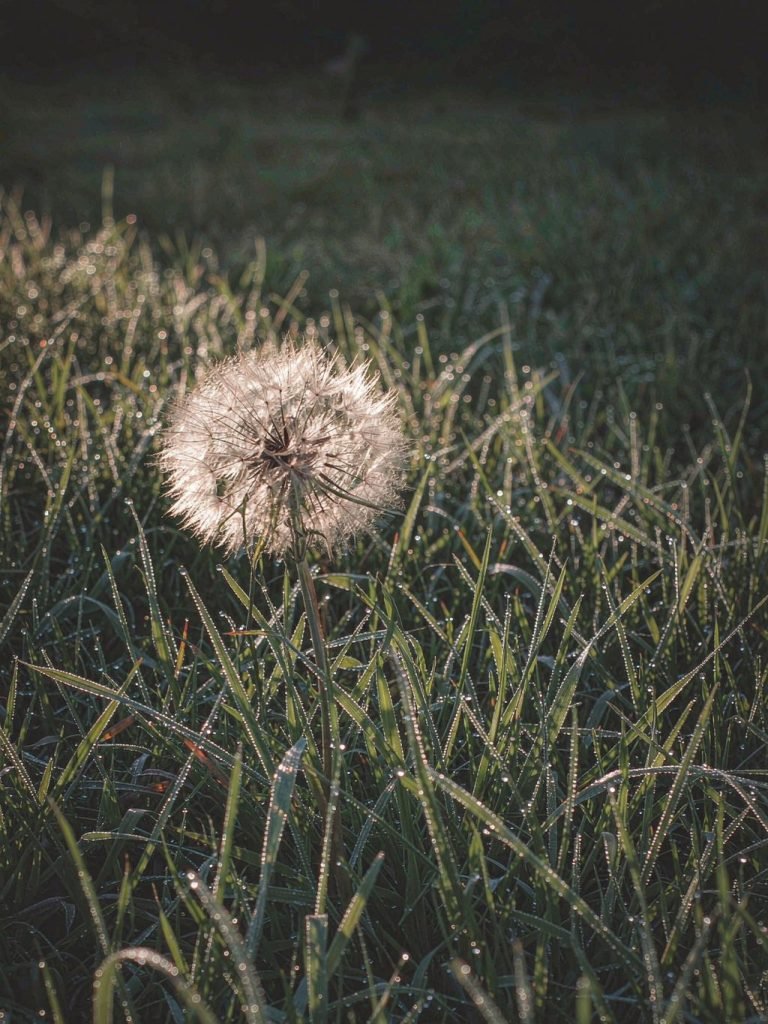
Every weed you pull leaves behind a bank of seeds that can outlive the gardener. A single dandelion produces up to 2,000 seeds; a crabgrass plant can drop 150,000. Most of them do not germinate the next spring. They wait, sometimes for decades, for disturbance and light.
The bank, by the numbers
In turf and garden soil, viable weed seed densities of 1,000 to 10,000 seeds per square metre are common, and counts above 50,000 have been recorded in long-cultivated ground. Only a small fraction germinate in any given year — typically 1–10%. That is the strategy: spread the risk across years.
This is why one season of good control feels like a transformation and the next season undoes it. You did not empty the bank. You interrupted one withdrawal.
Two ways to spend the bank
You can exhaust it or you can starve it. Exhausting means repeated shallow cultivation that brings seeds to the surface to germinate, then killing the seedlings before they set seed — the stale seedbed technique. Starving means mulching, dense planting and a thick lawn, so seeds that do germinate never see light.
Both require the same discipline: never let a weed set seed. One plant left to flower can replace everything you removed.
Perennials are a different problem
Dandelions, bindweed, thistle and nutsedge do not rely on seeds alone. They have taproots, rhizomes or tubers that store energy. Pulling the top off a bindweed plant leaves the root system intact, and it regrows within days.
For these, repeated defoliation works better than a single yank: cut the plant before it flowers, again and again, until the root reserves are spent. Systemic herbicide applied to the leaves in late summer moves into the root and is more effective than a spring spray, because the plant is sending reserves downward.
A schedule that actually reduces the bank
- Early spring. Pre-emergent barrier before soil reaches 55 °F (13 °C) — crabgrass germinates around 55–60 °F.
- Late spring. Hand-pull or spot-treat before anything flowers.
- Summer. Mow high and often; a dense canopy blocks light.
- Early autumn. Overseed bare patches and treat perennial broadleaf weeds while they are moving reserves to the root.
The one rule
Do not let weeds reproduce. Everything else — the products, the tools, the timing — is in service of that sentence. Break it once and the bank gets a deposit that will cost you three seasons to withdraw.